



The care guide for your wooden cutting board.
Everything you need to know is on this page: the first oiling, cleaning after use, oiling, beeswax and what to do about a smell, a stain or a scratch. It's less work than you think: 20 ml oil, 5 minutes, twice a month.
Getting it ready for use.
Your board arrives untreated. So give it a generous layer of oil first, before you start cutting on it. It takes five minutes of work and one night of waiting.
Grab the maintenance oil
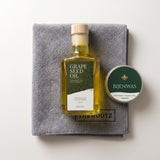
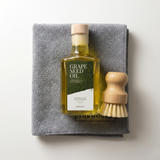
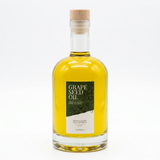
TheWootz maintenance oil is 100% grapeseed oil, with no additives. Food-safe, odourless and thin, so the oil soaks well into the wood.
Apply generously
Put the oil on a clean cloth and rub it into the whole board, along the grain. Include the sides and the underside. Don't be sparing this one time.
Leave it to soak in overnight
Lay the board on an old cloth or stand it upright. The wood absorbs what it needs.
Wipe off what's left
The next morning, wipe off the remainder with a dry cloth. The wood feels dry and isn't sticky. Now you can cut on it. Does the wood still look dry? Then give it a second layer in the same week.
 a new board is thirsty
Wash, dry, done.
Use your board for what it's made for: cutting, serving and enjoying. After that, a few simple rules apply.
Do
- Wash by hand with warm water and a little washing-up liquid
- Rinse both sides, not just the top
- Dry immediately with a cloth
- Leave to dry upright, so both sides get air
- Store in a dry place
Don't
- Put it in the dishwasher, not even once
- Leave it to soak or lie in soapy water
- Leave it to dry flat on the worktop
- Clean it with bleach or harsh products
- Store it next to the stove or on the radiator
- Chop bones on a cutting board: that's what the butcher block is for
Wood expands when it gets wet and shrinks when it dries. If that happens on one side, a board can warp or crack. So: wash briefly, dry immediately and stand it upright.
Oiling in four steps.
A wooden board keeps getting wet and drying out again. As a result, the wood loses its natural oils. With 20 ml of oil twice a month, the wood stays supple and repels moisture. If the wood feels dry or turns dull, oil it a little sooner.
Clean and dry
Wash the board and let it dry completely. Oil doesn't soak into wet wood.
20 ml oil on a cloth
Put the oil on a cloth and spread it thinly. That way you distribute the oil evenly.
Along the grain
Rub in the whole board: top, underside and sides. If your board has a juice groove, include that too.
Leave to soak in for 4 hours
Then wipe off what's left with a dry part of the cloth. The board is ready to use again straight away.
 five minutes, no more
Beeswax and wax block.
Oil soaks into the wood and nourishes it from within. Wax stays on top of the wood: the pores close and moisture stays out. Wax is an extra layer after oiling, not a replacement. Useful for a board that often gets wet, for a juice groove and for a butcher block.
Oil first
Wax goes over the oil, not before it. Let the oil soak in for 4 hours and wipe off what's left.
Apply thinly
Spread the beeswax from the tin thinly with a clean, soft cloth, along the grain. Rub the wax block directly over the wood. You don't need a cloth for that.
Edges and juice groove
Include the sides. With the cloth wrapped around your finger, you can reach into the juice groove too.
Buff
Buff with a clean part of the cloth until the wood feels smooth and has a soft sheen. Sticky? Then it was too much: buff it off with a dry cloth.
 from Dutch bees
Your care schedule.
Print it out and stick it on the fridge, or save this page. After a month you'll know it by heart.
| When | What | With what | How |
|---|---|---|---|
| Before first use | Oil generously | Maintenance oil | Generous layer, leave to soak in overnight |
| After every use | Wash and dry | Warm water and a little washing-up liquid | Dry immediately and leave to dry upright |
| Twice a month | Oiling | Maintenance oil and a cloth | 20 ml per board, leave to soak in for 4 hours |
| When water no longer beads | Thin layer of wax | Beeswax or wax block | Apply thinly after oiling and buff |
| For a smell or stain | Scrub clean | Coarse salt, half a lemon and the brush | Leave for 5 minutes, rinse, dry and then oil |
| For deep scratches | Sand lightly | Fine sandpaper, grit 180 or 240 | Along the grain, then remove the dust and oil generously |
TheWootz · thewootz.com/en/pages/onderhoudsgids
Notice this? Then do that.
My board feels dull, dry or rough. What do I do?
Then the wood needs oil. Rub in 20 ml of maintenance oil thinly and let it soak in for 4 hours. If the wood is very dry, give it a second layer in the same week.
Order maintenance oil →Water soaks into the wood instead of beading off. What now?
Then it's time for a thin layer of beeswax or the wax block. Oil the board first, let the oil soak in for 4 hours and then apply a thin layer of wax.
What beeswax does for wood →My board smells of onion, garlic or fish. How do I get the smell out?
Wash the board with warm water and a little washing-up liquid. Sprinkle coarse salt over it and squeeze half a lemon over the top. Scrub firmly with the brush, along the grain. Leave it for five minutes, rinse, dry immediately and stand the board upright. Oil it as soon as it's dry, because salt and lemon dry out the wood.
How to get the smell out →There's a stain on my board. Will it come out?
Usually, yes. Tackle a fresh stain from beetroot, turmeric or wine, for example, with coarse salt, half a lemon and the brush. If the colour has gone deeper, lightly sand the whole surface with fine sandpaper, along the grain. Then oil the board generously.
My board has scratches and knife marks. Is that a problem?
No, that comes with a board that gets used. Light scratches fade into the grain after a coat of oil. Lightly sand away deeper scratches with fine sandpaper, always along the grain. Then wipe off the dust, oil generously and leave to soak in for 4 hours.
Sanding and repairing →My board stays sticky after oiling. What went wrong?
You used more oil than the wood could absorb. Wipe off the remainder with a dry cloth. For a regular treatment, 20 ml is enough.
My board has warped. Can I get it straight again?
A slight warp, often yes. Dampen the hollow side with a wrung-out cloth, lay the board on a flat surface with that side down and put weight on it. Leave it overnight. Then let the board dry upright and oil it on all sides.
How to get it straight again →Can I also use the oil for other boards and wooden kitchen utensils?
Yes. The oil is suitable for every type of wood and for bamboo, so also for another cutting board or your wooden spoons and spatulas.
I can't figure it out. Can I ask you something?
Yes. Email info@thewootz.com or use the contact form. We reply personally.
Go to the contact form →What can and can't go on your board.
Fine on your board
- TheWootz maintenance oil, 100% grapeseed oil
- Beeswax or the wax block, after oiling
- Warm water with a little washing-up liquid
- Coarse salt and lemon, for a smell or a stain
Not on your board
- Olive oil, sunflower oil or other cooking oil: thicker, soaks in less well and has its own smell and taste
- Varnish, lacquer or wood stain
- Furniture oil or wax polish with solvents
- Bleach and harsh cleaning products
Oil, cloth, brush and beeswax.
Separately or as a set. A set contains the same products; together you pay less.
Care tips in your inbox.
Sign up for the newsletter: new boards, care tips and now and then something beautiful from the social workshop. Once a month at most.
